|
I am a third-year Ph.D. student at the Intelligent Vision Group (IVG), Department of Automation, Tsinghua University, advised by Prof. Jiwen Lu . Prior to that, I received my Bachelor's degree from the Department of Automation, Tsinghua University in 2023 (Ranking 1/170). I am broadly interested in large language model and computer vision. My current research focuses on multi-modal large language models and large vision models. |

|
|
* indicates equal contribution, † indicates project lead |

|
ByteDance Seed Technical Report, 2026 [Blog] Seed2.1 is ByteDance Seed's new generation of agent-capable foundation models built for real-world productivity, delivering reliable general agent capabilities, stable end-to-end coding, and state-of-the-art multimodal and video understanding. |
|
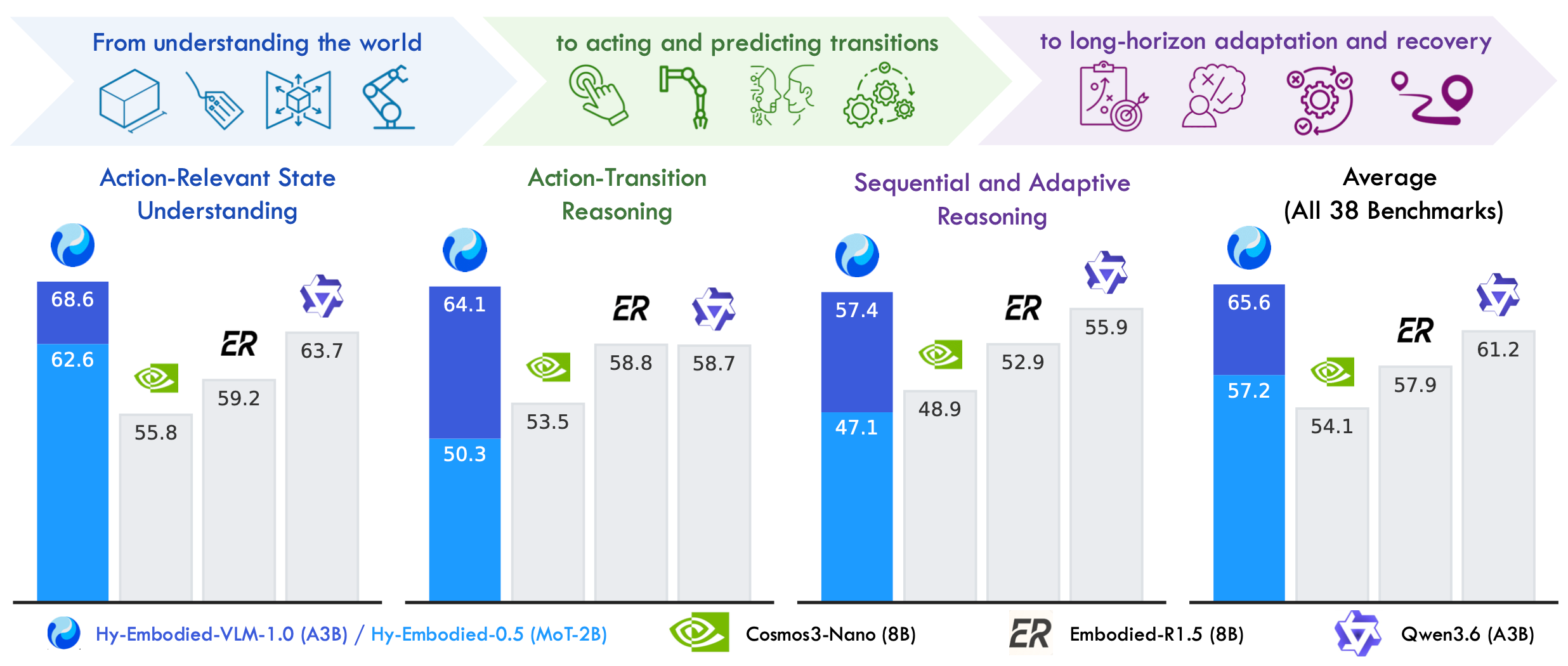
Tencent Robotics X, Hy Vision Team, Futian Laboratory Technical Report, 2026 [arXiv] [Code] Hy-Embodied-VLM-1.0 is an efficient Mixture-of-Experts embodied foundation model (~3B activated) that, guided by an action-centric capability taxonomy, achieves state-of-the-art physical-world understanding and reasoning across 38 embodied benchmarks. |
|
Xumin Yu*, Zuyan Liu*, Ziyi Wang*, He Zhang*, Yongming Rao, Fangfu Liu, Yani Zhang, Ruowen Zhao, Oran Wang, Yves Liang, Haitao Lin, Minghui Wang, Yubo Dong, Kevin Cheng, Bolin Ni, Rui Huang, Han Hu, Zhengyou Zhang, Shunyu Yao Technical Report, 2026 [arXiv] [Code] HY-Embodied-0.5 is a family of embodied foundation models built for real-world agents, achieving state-of-the-art performance across 22 benchmarks in visual perception, spatial reasoning, and embodied understanding, with effective downstream robot control. |
|

|
Zuyan Liu*, Yuhao Dong*, Ziwei Liu, Winston Hu, Jiwen Lu, Yongming Rao, International Conference on Learning Representations (ICLR), 2025 [arXiv] [Code] [Project Page] [中文解读] Oryx offers an on-demand solution to seamlessly and efficiently process visual inputs with arbitrary spatial sizes and temporal lengths. |

|
Zuyan Liu*, Yuhao Dong*, Jiahui Wang, Ziwei Liu, Winston Hu, Jiwen Lu, Yongming Rao arXiv, 2025 [arXiv] [Code] [Project Page] [中文解读] [Rank 1st on OpenCompass Leaderboard (<15B)] Ola is an Omni-modal Language model that achieves competitive performance across image, video, and audio understanding compared to specialized models, pushing the frontiers of the omni-modal language model. |
|
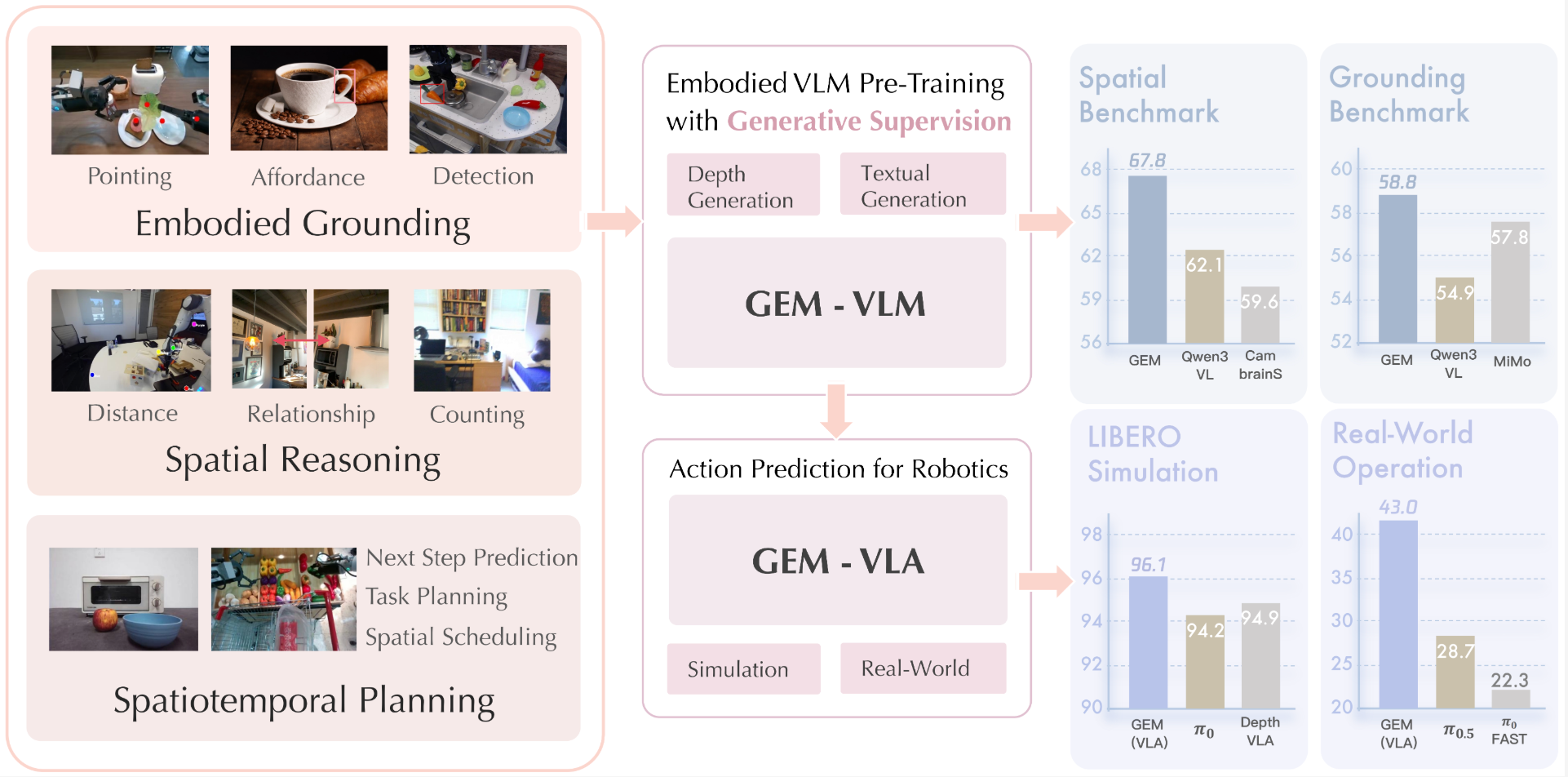
Ruowen Zhao, Bangguo Li, Zuyan Liu†, Yinan Liang, Junliang Ye, Fangfu Liu, Diankun Wu, Zhengyi Wang, Xumin Yu, Yongming Rao, Han Hu, Jun Zhu European Conference on Computer Vision (ECCV), 2026 [arXiv] [Code] [Project Page] GEM is a generative-supervised embodied VLM that adds a depth-generation objective to pre-training, boosting semantic reasoning and physical grounding for real-world robot manipulation. |
|
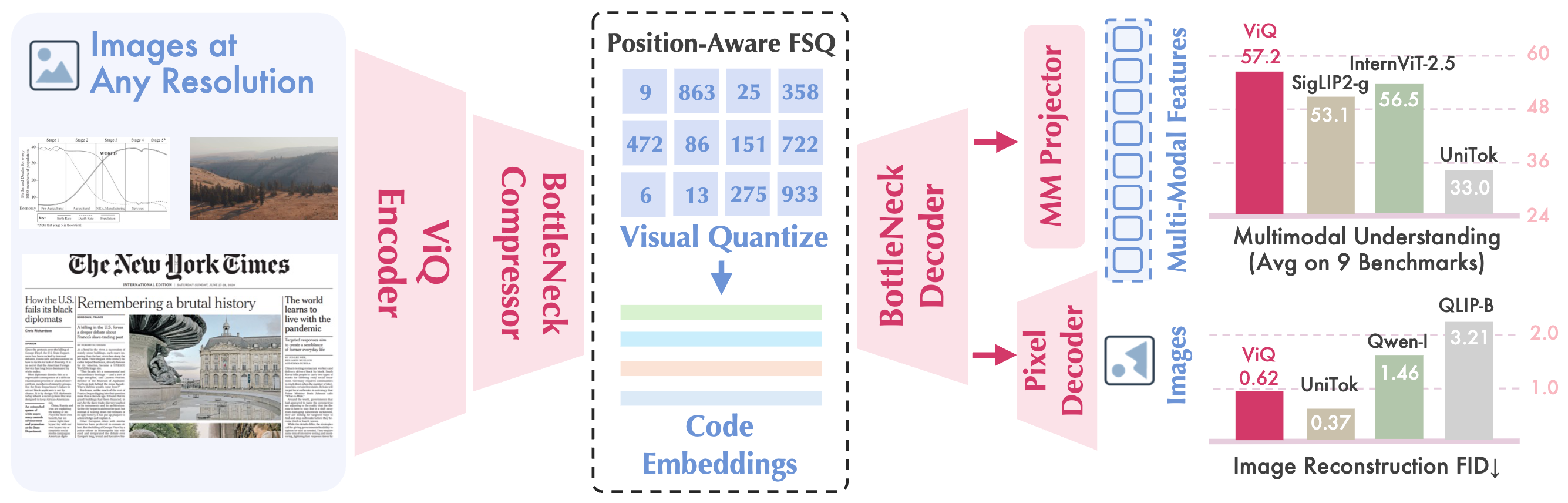
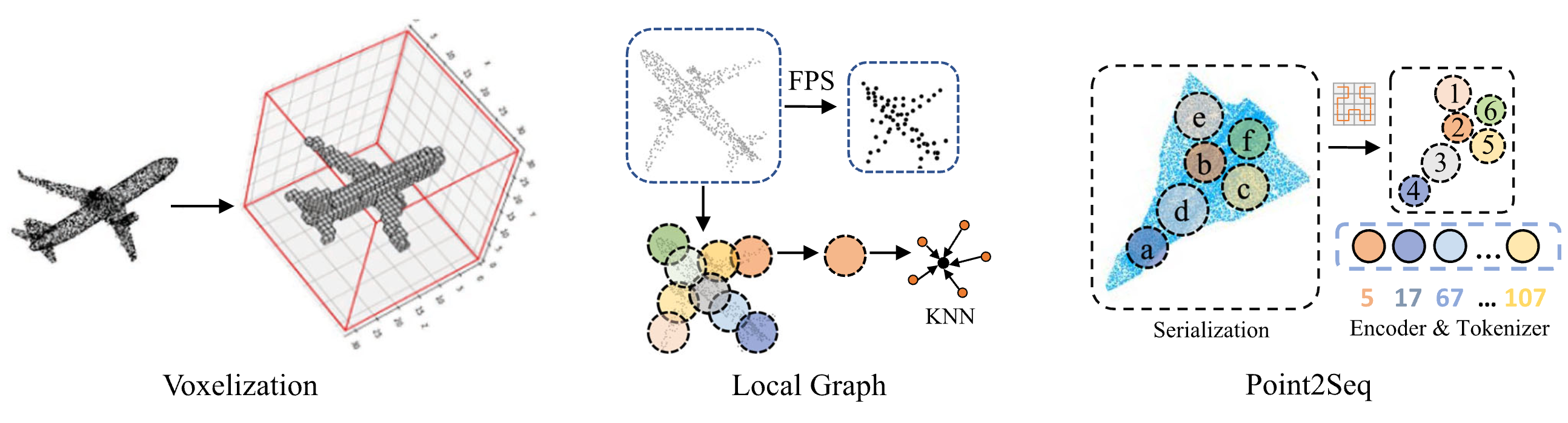
Xumin Yu*, Zuyan Liu*, Zhenyu Yang*, Yuhao Dong, Shengsheng Qian, Jiwen Lu, Han Hu, Yongming Rao European Conference on Computer Vision (ECCV), 2026 [arXiv] [Code] ViQ is a visual quantized representation framework that balances semantics and details in discrete visual codes at native resolutions, matching continuous encoders while keeping high-fidelity reconstruction and faster training. |

|
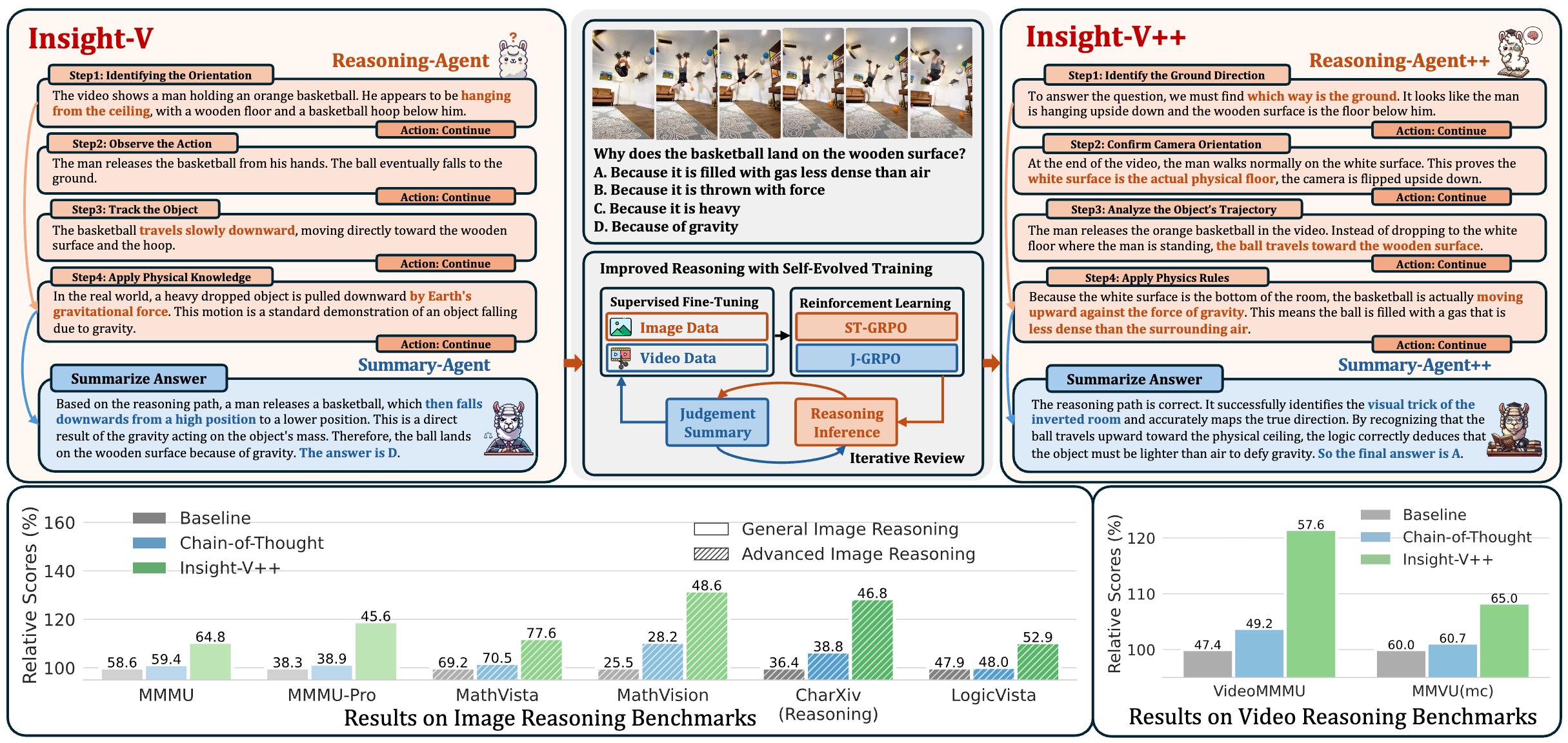
Yuhao Dong*, Zuyan Liu*, Hailong Sun, Jingkang Yang, Winston Hu, Yongming Rao, Ziwei Liu IEEE/CVF Conference on Computer Vision and Pattern Recognition (CVPR), 2025 Highlight [arXiv] [Code] [中文解读] Insight-V is a multi-agent system consisting of a reasoning agent dedicated to performing long-chain reasoning and a summary agent trained to judge and summarize reasoning results. |
|
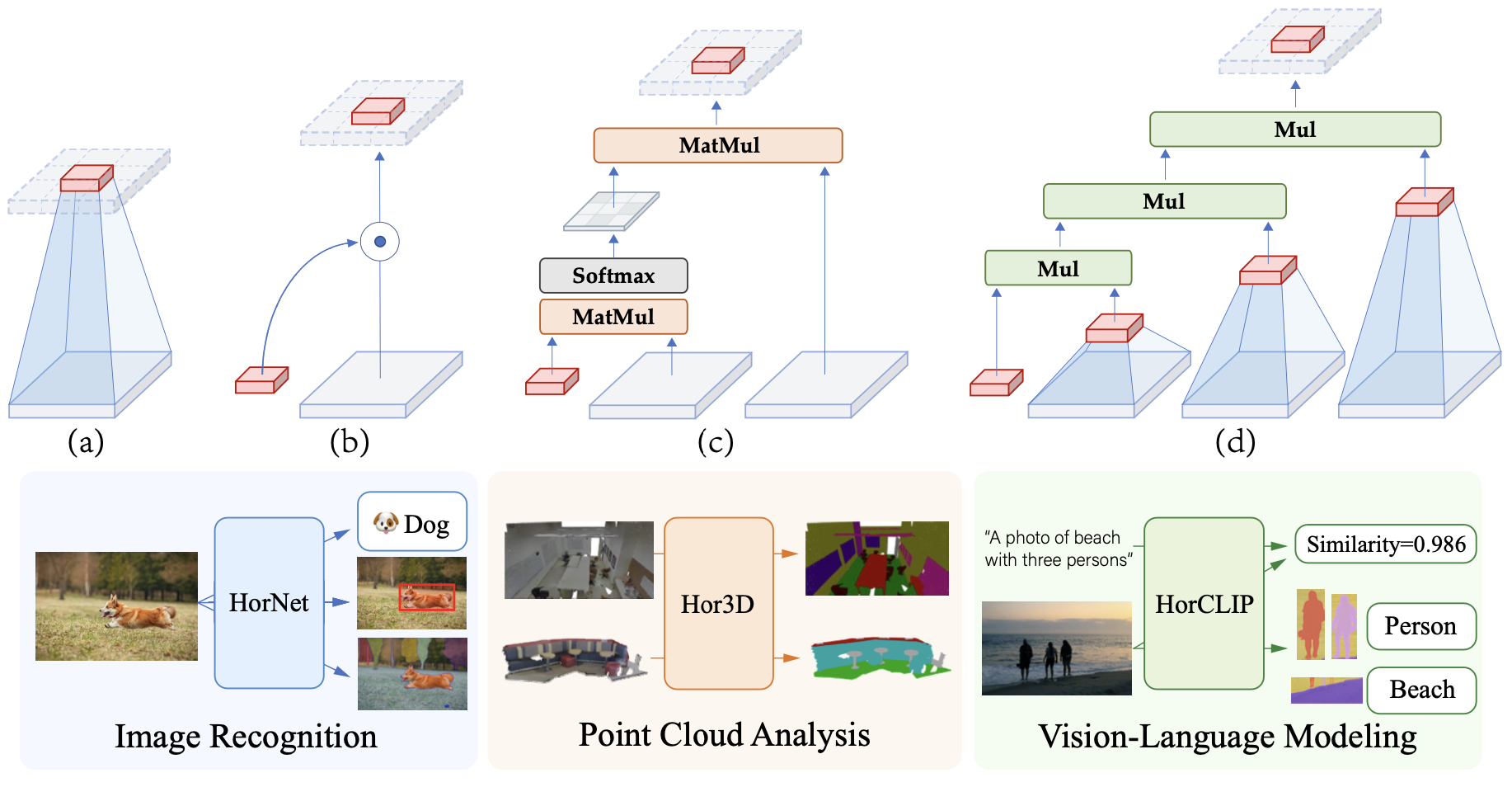
Zuyan Liu, Yongming Rao, Wenliang Zhao, Jie Zhou, Jiwen Lu IEEE Transactions on Pattern Analysis and Machine Intelligence (T-PAMI, IF:18.6), 2025 [Paper] [Code] [Project Page] We propose the general HorNet-Family, including HorNet, Hor3D, and HorCLIP for a comprehensive visual fundamental architecture with better performance-efficiency trade-off. |
|
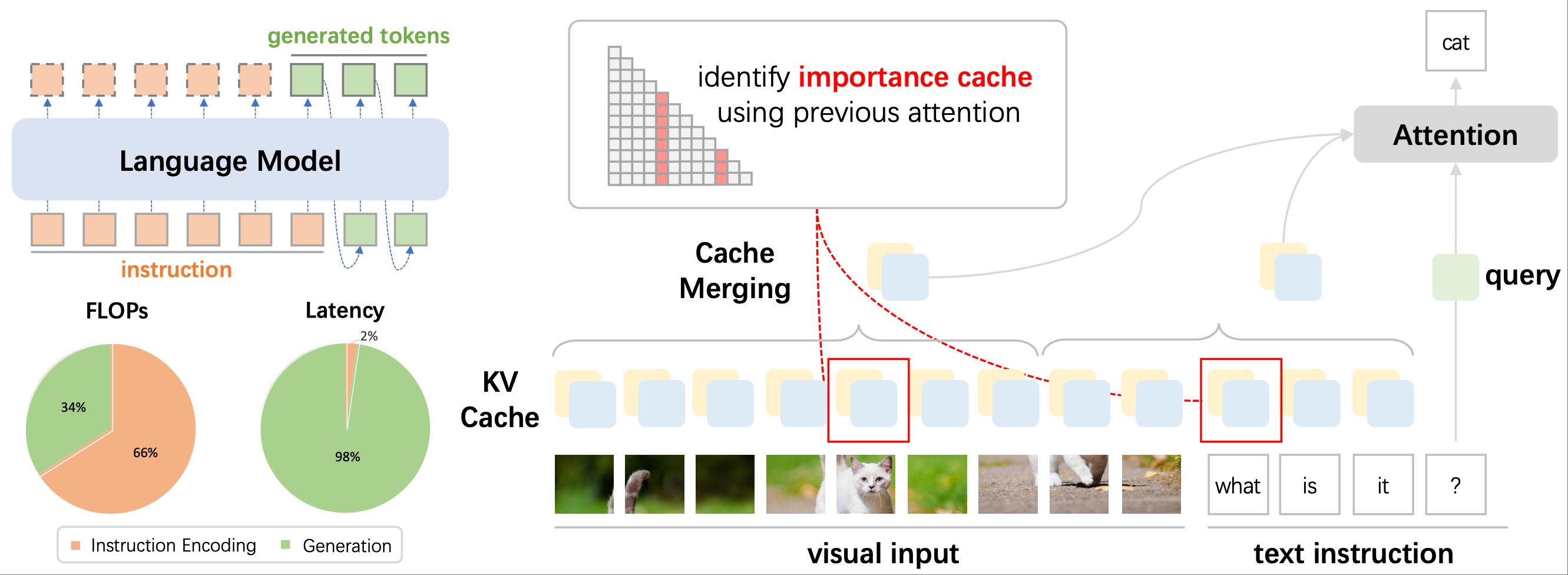
Zuyan Liu, Benlin Liu, Jiahui Wang, Yuhao Dong, Guangyi Chen, Ranjay Krishna, Yongming Rao, Jiwen Lu European Conference on Computer Vision (ECCV), 2024 [arXiv] [Code] [Project Page] Elastic Cache is a novel approach for KV Cache acceleration in multi-modal large language models that benefits from applying distinct acceleration methods for instruction encoding and output generation stages. |
|
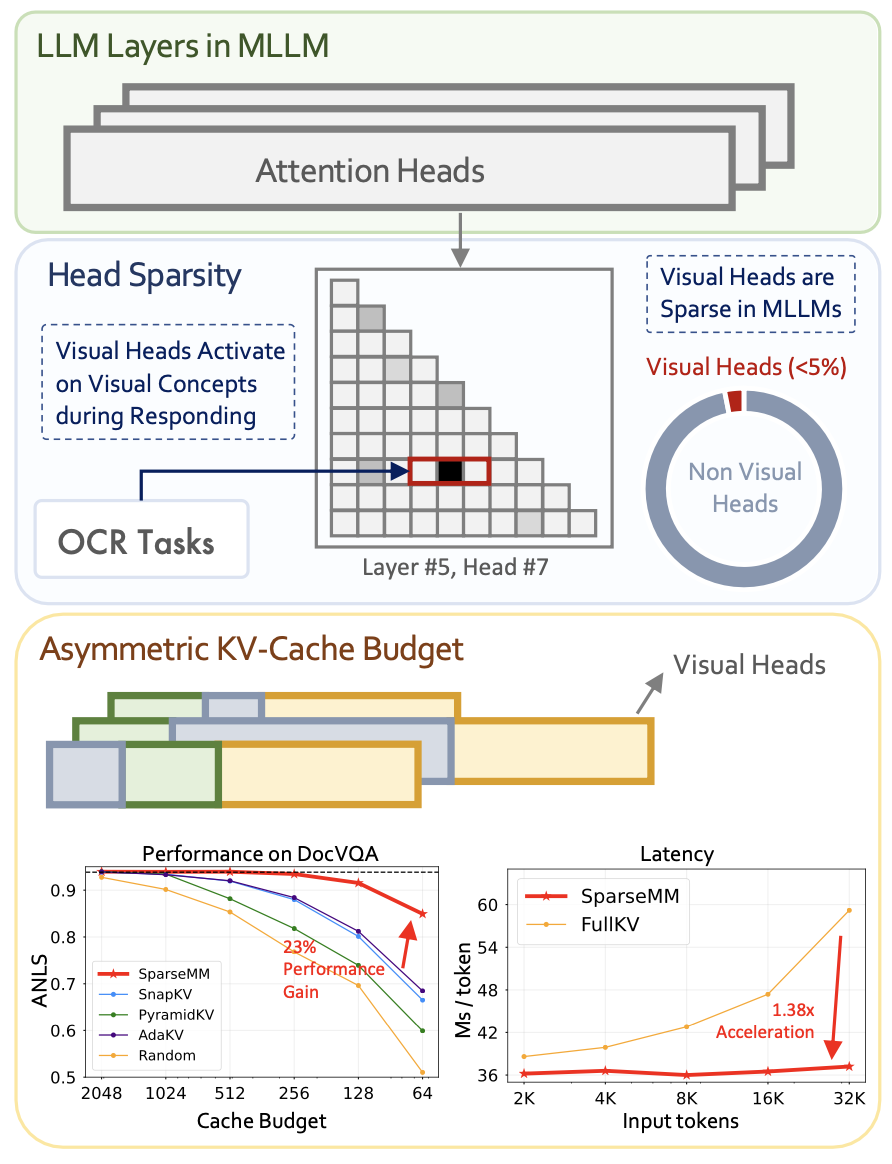
Jiahui Wang*, Zuyan Liu*, Yongming Rao, Jiwen Lu IEEE International Conference on Computer Vision (ICCV), 2025 [arXiv] [Code] [Project Page] [中文解读] SparseMM observe the sparsity of attention heads for vision-language multi-modal models, termed Visual Heads, and applies asymmetric operations to achieve model pruning and reasoning acceleration. |
|
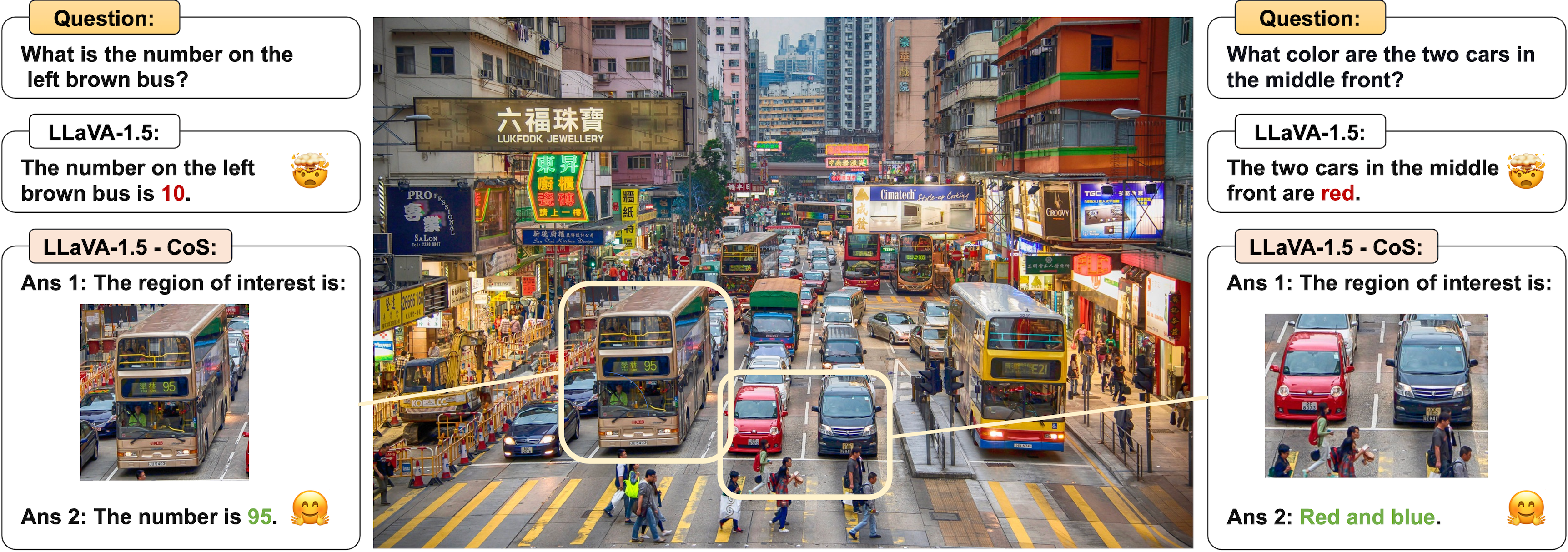
Zuyan Liu*, Yuhao Dong*, Yongming Rao, Jie Zhou, Jiwen Lu arXiv, 2024 [arXiv] [Code] [Project Page] The Chain-of-Spot (CoS) method is an approach that enhances feature extraction by focusing on key regions of interest (ROI) within the image, corresponding to the posed questions or instructions. |
|
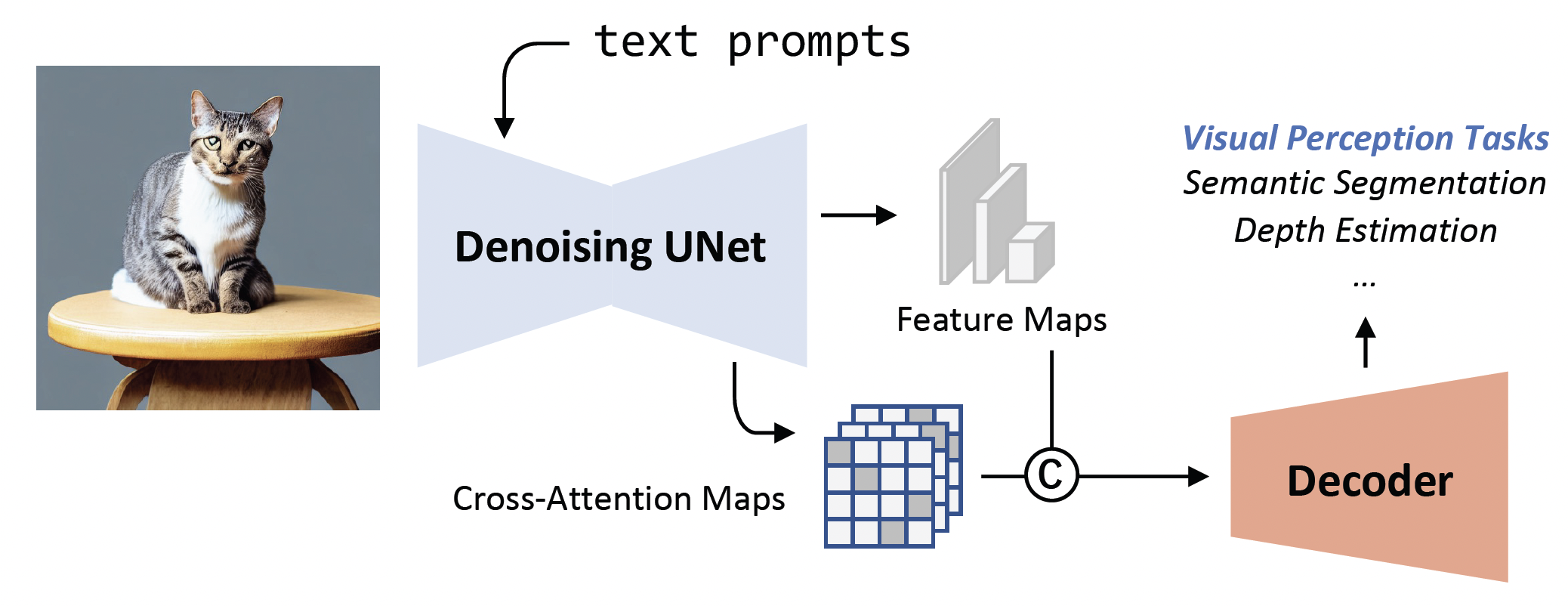
Wenliang Zhao*, Yongming Rao*, Zuyan Liu*, Benlin Liu Jie Zhou, Jiwen Lu IEEE International Conference on Computer Vision (ICCV), 2023 [arXiv] [Code] [Project Page] [Rank 1st on NYUv2 Depth Estimation] VPD (Visual Perception with Pre-trained Diffusion Models) is a framework that leverages the high-level and low-level knowledge of a pre-trained text-to-image diffusion model to downstream visual perception tasks. |

|
Yongming Rao*, Zuyan Liu*, Wenliang Zhao*, Jie Zhou, Jiwen Lu IEEE Transactions on Pattern Analysis and Machine Intelligence (T-PAMI, IF:24.31), 2023 [arXiv] [Code] [Project Page] The dynamic spatial sparsification framework can be applied to general visual architectures (e.g. Transformers, ConvNeXt, Swin Transformers) and visual tasks (e.g. classification, object detection, semantic segmentation) for efficient inference. |


|
|

|
Multi-Modal Group, Research Intern Topic: VLM Post-Train |

|
Multi-Modal Model Group, Research Intern Topic: Multi-Modal |
|
|
Seed Vision Group, Research Intern Topic: Video Generation |

|
Vision Model Research Center, Research Intern Topic: Multi-Modal |

|
Intelligent Creation Group, Research Intern Topic: Human AIGC |
|
|
|
|
|
|
© Zuyan Liu | Last updated: May 25, 2025